

Is travel really aging us?
What the biohackers and looksmaxxers have forgotten about the importance of living life, not just optimizing it.

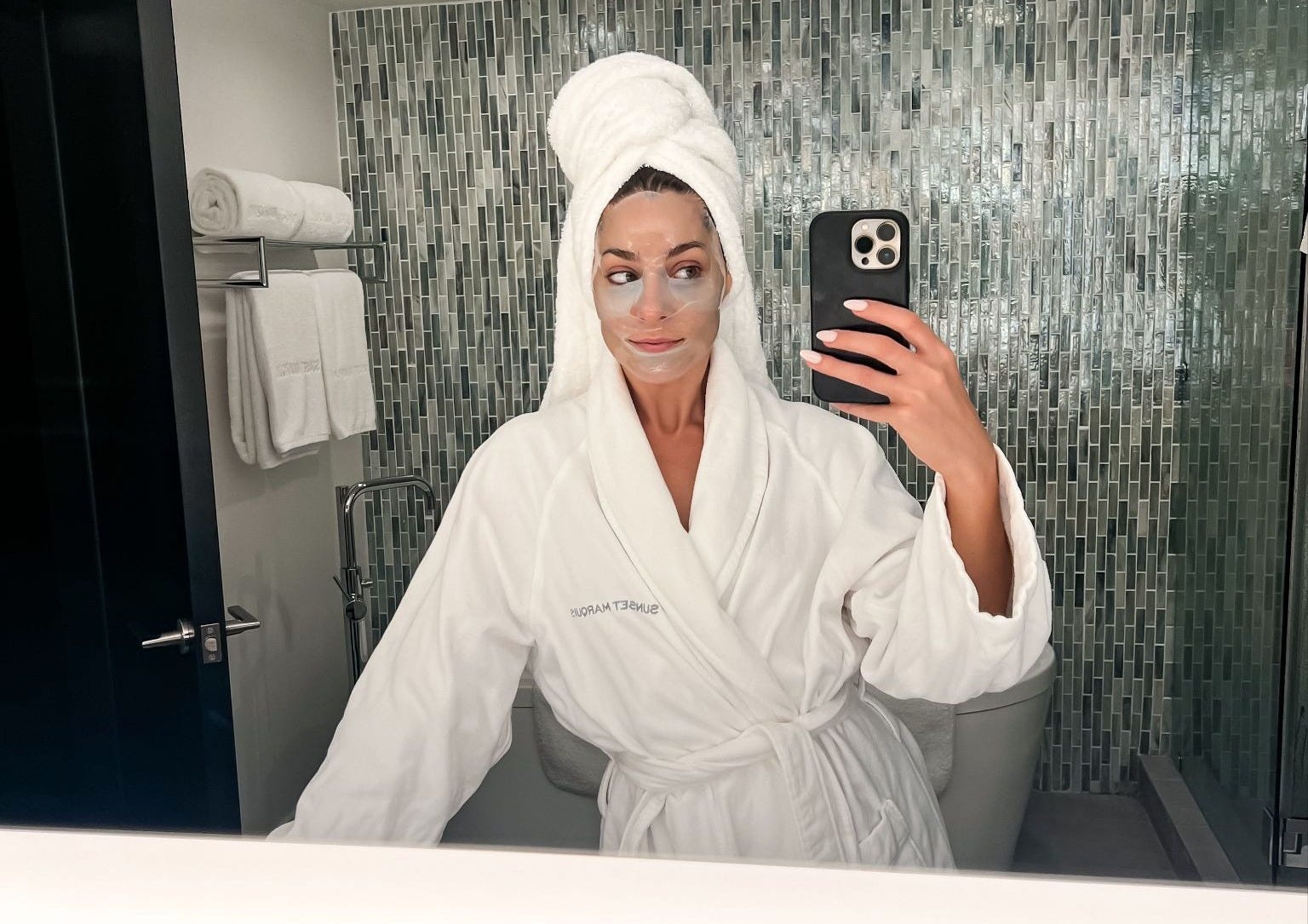
On the way back from a recent trip to Mexico, I counted seven welts on my arms and legs, placed by satiated mosquitoes. They joined two pink zits forming above my right eyebrow. I craved a home-cooked meal to remedy my unrelenting bloat, and I also couldn’t wait to disappear the dark circles under my eyes with a solid eight hours of consecutive sleep in my own bed.
When returning home from any travels, I’m often reminded of one of my favorite movies, Death Becomes Her, in which Meryl Streep and Goldie Hawn (whose characters are both dead yet immortal because they sucked down an elixir to restore their youth) are keeping their decaying bodies together with spray paint and spackle. During the final scene, the duo attends the funeral of their shared love interest, played by Bruce Willis, who opted not to live forever. They both take a tumble down the church stairs; body parts fly, and heads roll.
This is usually how I feel at the end of a vacation: in pieces, with a lot of work to do to put myself back together.

Feeling undone post-trip is the price we’ve come to expect to pay in exchange for far-from-home experiences. But those chasing perfect health have started to make a case against travel altogether, likening hopping on a plane to being just as “aging” as skipping sunblock on a pool day or overdoing it on processed sugar.
I recently heard a doctor on a podcast say a coast-to-coast round-trip flight produces about ⅓ of the exposure that a chest X-ray does due to cosmic radiation from outer space, which has an aging effect on the body, especially for frequent flyers.
Meanwhile, the live-forever figure Bryan Johnson claims that jet lag increases biological age by about 13 years, citing a trip from Los Angeles to Australia that affected his sleep, mood, cortisol levels, and blood glucose for upwards of two weeks after returning home.
There’s always been a cultural obsession with aging backward (Death Becomes Her came out 32 years before The Substance, two movies that explore the fantasy that aging can be outsmarted). But with today’s talk of peptides, SMAS facelifts, exosomes, stem cells, and so on, age reversal seems less theoretical and more attainable.
I’ll admit that I’m just as vain as the next gal; I love to splurge on skincare and supplements that promise to freeze my face in time and push back my biological clock. But the pursuit of a perfect sleep score can’t come at the cost of skipping a summer in Paris, spent sucking down an Aperol Spritz at a corner cafe that spills out onto a busy sidewalk.
We’ve become so infatuated with glow-ups and self-improvement that we’re starting to discount joy and memories as legitimate returns on investment. To justify travel as something productive, there’s been an uptick in longevity trips, where travelers go abroad for everything from beauty treatments in South Korea to hormone testing and prescribed protocols in Turkey. Long-haul flights become a means to an end for optimizing health, while simply vacationing for the thrill of it has a tinge of hedonism.
There is no positive biomarker to record after a trip to Oaxaca, Mexico, to taste-test moles and mezcal, but there are harder-to-track changes that shouldn’t be ignored.
When you break away from your identity and routine at home, novelty and discomfort can stimulate personal change. The greater the social, economic, or cultural contrast between your city of departure and your destination, the more likely you are to experience a shift in perspective. That’s because you’re introducing friction, and friction (especially in a society where we can order a meal on an app and pick it up from our doorstep 30 minutes later) is good.
So while a 20-step self-care routine before bed might make your wearable happy, it’s not going to inspire you to evolve, or change your mind, or better your life.
Everything can be true at once: travel can both reenergize and deplete you. There’s no denying that it’s hard on the body. And there are choices you make when you’re away that you wouldn’t make at home: eating out, drinking more, staying up late, skipping workouts.
But if the magic elixir to reverse aging were simply to stop traveling, I, just like Bruce Willis’ character, wouldn’t take it. What’s endearing about Death Becomes Her is the unapologetic exposition: “I’ll have to watch everyone around me die. I don’t think this is right. This is not a dream. This is a nightmare!” he says.
What scares me more than outliving loved ones is looking back on my life and remembering little beyond my strict routine. We are so obsessed with looking young and living forever, but for what? We should be far more concerned with the prospect of living our lives in a vacuum.

Travel talk
The headlines and happenings that came across my desk this week

Near: Here’s your reminder that The Hamptons has more going on than Summer House drama. Boutique hotel Faraway Sag Harbor opened earlier in June, following a seven-month renovation of the historic Baron’s Cove property.
Far: Putting the Love Island UK villa to shame is the ultra-luxury Mandarin Oriental Punta Negra, which also debuted in Mallorca, Spain, on June 1.
Noteworthy: By now, we’ve all seen the Dua Lipa wedding look that 26/27 brides will be tipping their hats to. But will she also set into motion a surge in Sicilian destination weddings? Her “I dos” are rumored to have been exchanged at Villa Valguarnera, followed by honeymooning at the San Domenico Palace, Taormina, a Four Seasons hotel, which was the backdrop for season two of The White Lotus.
Aspirational: En route to the U.S. for the World Cup, the French National Team sported a few travel bags that are absolute goals, including a Louis Vuitton monogrammed duffel, a black leather Hermès Haut à Courroies (HAC), and even a bright green Chanel bag.
this is so well said. i did not even realize people were having this conversation??? but would not change a single trip i’ve taken for more time!!
Im going to keep travelmaxxing